|
Welcome to Fr Bill!
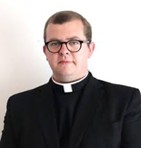
We welcome Fr Bill O Shaughnessy as our Parish Priest as he arrives among us, in Lucan, this weekend. Fr Bill hails from Castledermot, the parish furthest south on the Kildare side of the archdiocese. Castledermot is the birthplace of St Laurence O Toole, our diocesan patron saint.
Fr Bill comes to us from the parishes of Springfield, Jobstown and Brookfield where he served as moderator. Fr Bill is Assistant Director of Vocations in the diocese. He is coming with an open heart and enthusiasm to serve the parishes of St Mary's and St Patrick's.
As Fr Bill comes among us as our pastoral leader, we enter a new time in our parishes. Fr Bill will find himself in an open and a supportive faith community as he settles among us in ministry. Together we will continue to forge a way through present times and towards the beckoning future.
Fr Bill, we offer you a hearty welcome as you settle into your new place of home with us in Lucan.
Cathy Burke
Catechist in the Lucan Partnership of Parishes
ORDINATION TO PERMANENT DIACONATE OF JOHN GORMLEY AND ARCADIUS LENKIEWICZ
ALL PARISHIONERS AND FRIENDS ARE INVITED
Archbishop Dermot Farrell will ordain John Gormley (Parishes of St Mary's & St Patrick's, Lucan)
and Arcadius Lenkiewicz (Parish of St Philip the Apostle, Mountview, Blanchardstown)
as permanent deacons to serve in the Archdiocese of Dublin
on Saturday 19th July at 3.00p.m.
This is a wonderful parish celebration and EVERYONE is invited!
John Gormley has generously responded to a vocation to the Permanent Diaconate in the Archdiocese to Dublin. John has spent that last four years studying theology, engaging in formation & prayer, actively discerning his call and response to ordained ministry.
The ministry of deacon has origin in the early church in seeking to serve the most marginalised and also in supporting the work of the bishops and priests. The Apostles selected and ordained men for this service to assist at the celebration of the Eucharist, preach the Gospel and exercise in charitable service. Many of the services carried out by deacons may also be served by lay people. Ordained diaconate is a public witness of Christ the Servant.
Call of the First Deacons (Acts 6:2-5)
The Twelve called a full meeting of the disciples and addressed them, 'It would not be right for us to neglect the word of God so as to give out food; you, brothers, must select from among yourselves seven men of good reputation, filled with the Spirit and with wisdom, to whom we can hand over this duty. We ourselves will continue to devote ourselves to prayer and to the service of the word.' The whole assembly approved of this proposal and elected Stephen, a man full of faith and of the Holy Spirit, together with Philip, Prochorus, Nicanor, Timon, Parmenas, and Nicolaus of Antioch.
There are two forms of ordained deacons in the Church:
Transitionary Diaconate which is the first ordination received by those on the journey towards ordination as priests.
Permanent Diaconate of men who are ordained into the particular ministry of service.
Both married and single men may be Permanent Deacons.
John is supported by his wife Edel, as Arcadius is by his wife Wiola. Ongoing discernment from initial application to the decision to present for ordination is very much a couple process so that the commitment and the implications are well considered together.
John, a father of four boys, brings a wealth of experience to the role as a recently retired secondary school teacher and as a very active parish volunteer for many years. John also brings his perspective as a married man and father to the role. He also brings his kind nature, open heart and good humour to the mix.
What do Permanent Deacons Do?
Serve at the Altar
Assist the priest at celebrations of the Eucharist.
Celebrate Marriage (with appropriate delegation)
Preside at funerals
Celebrate Baptism
Assist with formation of Altar Servers
Proclaim the Word
Proclaim the Gospel
Preach the Homily
Assist with formation of readers
Assist with sacramental preparation programmes
Charity
Visit the sick and bereaved
Facilitate development of lay ministry
Promotion of awareness of social teachings of the Church
Administration of Church property
The permanent deacon is called to work in close cooperation with the priests and all who serve in the various ministry groups in the parish. Deacons are not replacements for the priest or for lay ministers as all ministries serve necessary purpose and function. The Eucharist can only be celebrated by the priest. The Eucharist is core to being Church.
We look forward to welcoming John as Reverent Deacon John in his new role and ministry on the parish team. We are grateful to John for his generosity of response and look forward to supporting him in his new ministry among us.
Do come along to support John, at the ordination, and to pray for him.
St Mary's & St Patrick's Parish Pastoral Council
|